Poinsettia
Not listed does not mean safe.
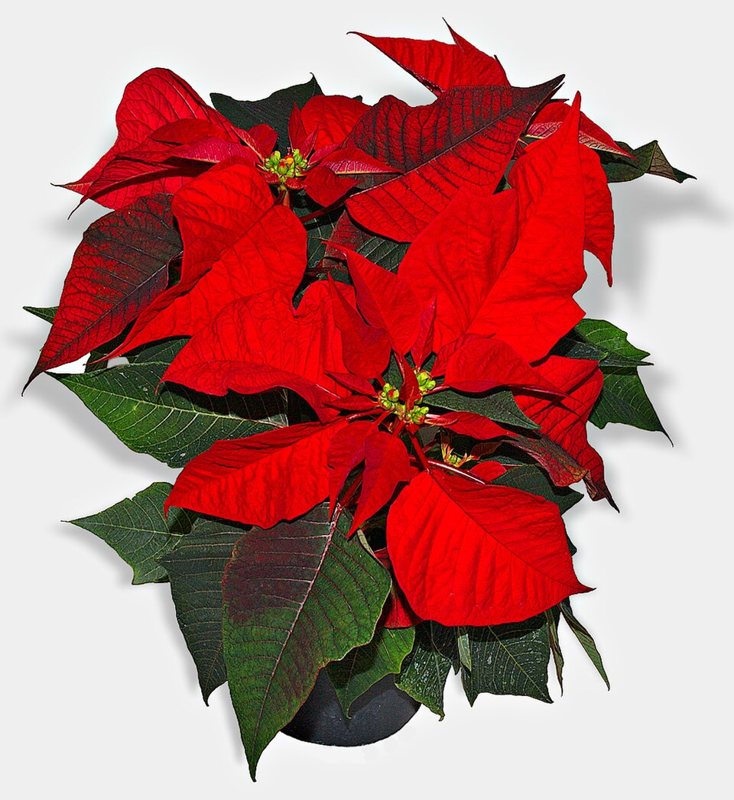
André Karwath aka Aka · CC BY-SA 2.5 · Photo source · shows: Poinsettia

Evidence by animal
| Animal | Verdict | Basis | Plant parts | Sources | Evidence link |
|---|---|---|---|---|---|
| Companion mammals | |||||
| Cats | Cats: ⚠ Toxic | Not specified | ASPCA Toxic and Non-Toxic Plants Poison control | evidence | |
| Dogs | Dogs: ⚠ Toxic | Not specified | ASPCA Toxic and Non-Toxic Plants Poison control | evidence | |
| Horses & livestock | |||||
| Horses | Horses: ⚠ Toxic | Not specified | ASPCA Toxic and Non-Toxic Plants Poison control | evidence | |
| Small mammals | |||||
| Rabbits | Rabbits: ! Caution | WHRS Class 3: low-level toxin; Peer-reviewed experiment, skin and eye tests only (PMID 737986) | Not specified | Wisconsin House Rabbit Society Rescue/education group Winek et al. 1978 Peer-reviewed | evidence |
| Rats | Rats: ✓ Non-toxic | Peer-reviewed experiment: no toxicity found at tested doses (PMID 737986) | Not specified | Winek et al. 1978 Peer-reviewed | evidence |
| Birds | |||||
| Pet birds (general) | Pet birds (general): ⚠ Toxic | VCA: specifically reported harmful in birds | Not specified | VCA Animal Hospitals Veterinary reference | evidence |
| Budgerigars (budgies) | Budgerigars (budgies): ⚠ Toxic | Not specified | evidence | ||
| Reptiles | |||||
| Tortoises | Tortoises: ! Caution | Tortoise Trust: listed as toxic, degree uncertain | Not specified | Tortoise Trust Specialist charity | evidence |
Source excerpts
ASPCA Toxic and Non-Toxic Plants — Cats, Dogs, Horses
poison-control
Toxic to Dogs, Toxic to Cats, Toxic to Horses
Source checked 2026-10-27
Read original sourceWisconsin House Rabbit Society — Classes of Toxic Plants — Rabbits
rescue-education
WHRS Class 3: low-level toxin · Wisconsin House Rabbit Society chapter list (G. Flentke, 2012): Class 3 — "Low risk plants": "Low-level toxins or toxins that herbivores, such as rabbits, routinely handle better than non-herbivore species" (list heading: "Low Level Toxins"). WHRS says to watch the rabbit for signs of poisoning.
Poinsettia
Source checked 2026-10-27
Read original sourceToxicology of poinsettia — Rabbits
peer-reviewed
Peer-reviewed experiment, skin and eye tests only (PMID 737986) · Same study: latex 'induced no damage when instilled into the eyes of albino rabbits' and 'induced skin photosensitivity in albino rabbits'. Skin and eye exposure only; the abstract reports no feeding test in rabbits.
Upon repeated exposures poinsettia exhibited mild skin irritation in the albino rabbit.
Source checked 2026-10-27
Read original sourceToxicology of poinsettia — Rats
peer-reviewed
Peer-reviewed experiment: no toxicity found at tested doses (PMID 737986) · 1978 study: five days of dosing up to 125 gm/kg total and a five-day diet study produced no gross or microscopic pathology in Sprague Dawley rats; latex in the mouth caused no local toxicity. This is a laboratory result for rats only.
The acute oral LD50 of poinsettia in Sprague Dawley rats were greater than 25 gm/kg for all plant parts tested.
Source checked 2026-10-27
Read original sourceAvian toxicoses: a review (Frontiers in Veterinary Science, 2025) — Pet birds (general)
peer-reviewed
Review section "Toxic plants (miscellaneous)" on pet birds.
Many ornamental plants are toxic, such as Coronilla varia, Ericaceae family (for example Rhododendron spp.), Kalanchoe spp., Nerium oleander, Taxus media, Digitalis purpurea, and Euphorbia pulcherima (81).
Source checked 2026-10-27
Read original sourceVCA Animal Hospitals — Plants That Are Toxic to Birds — Pet birds (general)
veterinary-reference
VCA: specifically reported harmful in birds · VCA: asterisk = "plants that are specifically reported to be harmful in birds".
Poinsettia*
Source checked 2026-10-27 (source updated Aug 14, 2026)
Read original sourceAvian toxicoses: a review (Frontiers in Veterinary Science, 2025) — Budgerigars (budgies)
peer-reviewed
Table 2, "Some plants are toxic to pet birds" (C = clinical report, E = experimental). Basis: experimental.
Poinsettia | Budgerigars (E)
Source checked 2026-10-27
Read original sourceTortoise Trust — Toxic Plants and Tortoises — Tortoises
specialist-charity
Tortoise Trust: listed as toxic, degree uncertain · Tortoise Trust toxic-plant list (from Highfield 2001): "Some plants on this list may be safely consumed in small or moderate quantities, but may be fatally toxic under certain circumstances or in large doses"; exact degree of toxicity unknown.
Poinsettia
Source checked 2026-10-27
Read original sourceNo evidence collected in this database yet for 15 animals
No evidence collected in this database yet for: Guinea pigs, Hamsters, Mice, Chinchillas, Ferrets, Parrots (macaws, Amazons, African greys…), Cockatiels, Lovebirds, Canaries, Finches, Pigeons & doves, Bearded dragons, Iguanas, Goats, Chickens & other poultry
No supported claim has been collected for these animals. Not listed does not mean safe; do not infer suitability from another species.
Toxic principles
ASPCA, as published: Irritant sap Source
Clinical signs
ASPCA, as published: Irritating to the mouth and stomach, sometimes causing vomiting, but generally over-rated in toxicity. Source
More from veterinary sources
Last verified (ASPCA record): 2026-10-27. Source access dates and limitations.
Similar plants (same family)
Shared family is not a shared verdict. Check each plant separately.