Castor Bean Plant
Not listed does not mean safe.
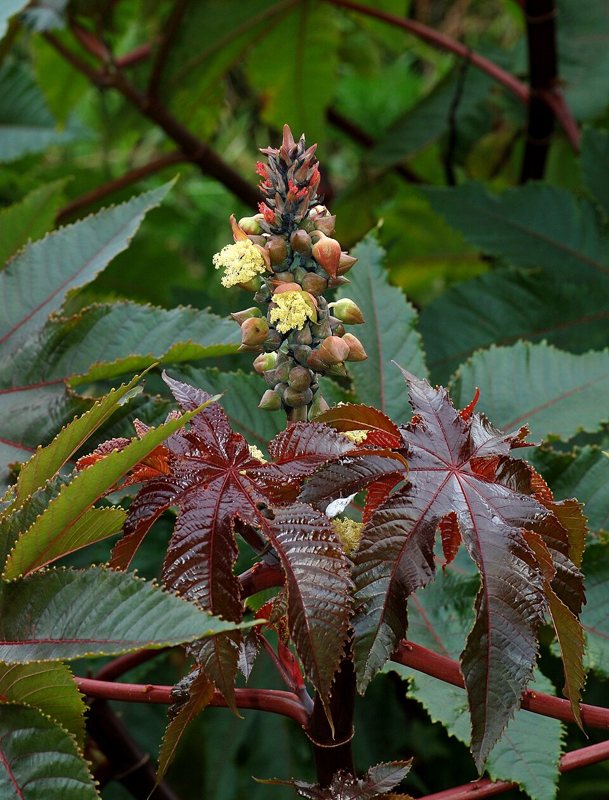
Alvesgaspar · CC BY-SA 3.0 · Photo source · shows: Ricinus

Ricinus communis
Also known as: Castor Oil Plant, Mole Bean Plant, African Wonder Tree, Castor Bean
Family: Euphorbiaceae · ASPCA plant record
Verdict at a glance
Evidence by animal
| Animal | Verdict | Basis | Plant parts | Sources | Evidence link |
|---|---|---|---|---|---|
| Companion mammals | |||||
| Cats | Cats: ⚠ Toxic | Not specified | ASPCA Toxic and Non-Toxic Plants Poison control | evidence | |
| Dogs | Dogs: ⚠ Toxic | Not specified | ASPCA Toxic and Non-Toxic Plants Poison control | evidence | |
| Horses & livestock | |||||
| Horses | Horses: ⚠ Toxic | Not specified | ASPCA Toxic and Non-Toxic Plants Poison control | evidence | |
| Chickens & other poultry | Chickens & other poultry: ⚠ Toxic | Not specified | UC Davis School of Veterinary Medicine University | evidence | |
| Small mammals | |||||
| Rabbits | Rabbits: ⚠ Toxic | Not specified | UC Davis School of Veterinary Medicine University | evidence | |
Source excerpts
ASPCA Toxic and Non-Toxic Plants — Cats, Dogs, Horses
poison-control
Toxic to Dogs, Toxic to Cats, Toxic to Horses
Source checked 2026-10-27
Read original sourceUC Davis School of Veterinary Medicine — Toxic Plant Garden — Rabbits, Chickens & other poultry
university
UC Davis Toxic Plant Garden entry: Castor Bean (Ricinus communis)
Toxic to cats, dogs, horses, cows, poultry, rabbits
Source checked 2026-10-27
Read original sourceNo evidence collected in this database yet for 18 animals
No evidence collected in this database yet for: Guinea pigs, Hamsters, Rats, Mice, Chinchillas, Ferrets, Pet birds (general), Parrots (macaws, Amazons, African greys…), Budgerigars (budgies), Cockatiels, Lovebirds, Canaries, Finches, Pigeons & doves, Tortoises, Bearded dragons, Iguanas, Goats
No supported claim has been collected for these animals. Not listed does not mean safe; do not infer suitability from another species.
Toxic principles
ASPCA, as published: Ricin Source
Clinical signs
ASPCA, as published: Beans are very toxic: oral irritation, burning of mouth and throat, increase in thirst, vomiting, diarrhea, kidney failure, convulsions. Access to ornamental plants or pruned foliage most common in poisonings. Ricin is a highly toxic component that inhibits protein synthesis; ingestion of as little as one ounce of seeds can be lethal. Signs typically develop 12 to 48 hours after ingestion, and include loss of appetite, excessive thirst, weakness, colic, trembling, sweating, loss of coordination, difficulty breathing, progressive central nervous system depression, and fever. As syndrome progresses, bloody diarrhea may occur, and convulsions and coma can precede death. Source
Last verified (ASPCA record): 2026-10-27. Source access dates and limitations.
Similar plants (same family)
Shared family is not a shared verdict. Check each plant separately.