Autumn Crocus
Not listed does not mean safe.
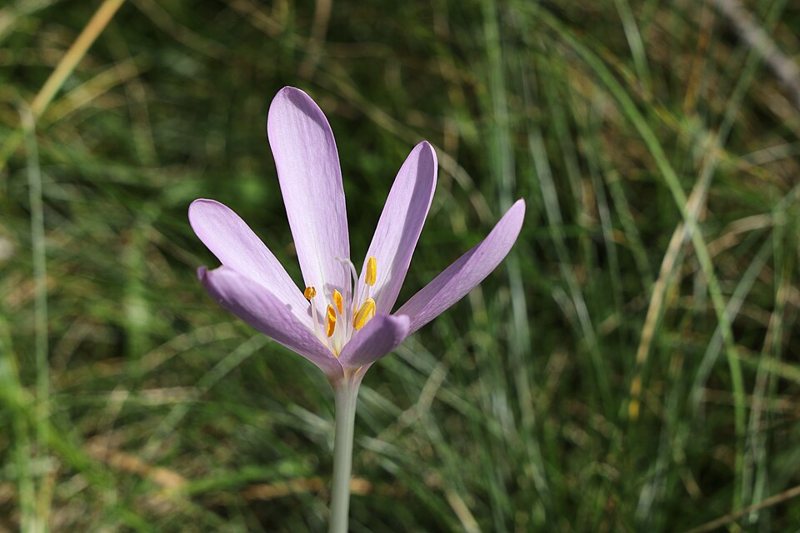
T. Kebert · CC BY-SA 4.0 · Photo source · shows: Colchicum autumnale

Colchicum autumnale
Also known as: Meadow Saffron
Family: Liliaceae · ASPCA plant record
Verdict at a glance
Show all animals
Evidence by animal
| Animal | Verdict | Basis | Plant parts | Sources | Evidence link |
|---|---|---|---|---|---|
| Companion mammals | |||||
| Cats | Cats: ⚠ Toxic | Not specified | ASPCA Toxic and Non-Toxic Plants Poison control | evidence | |
| Dogs | Dogs: ⚠ Toxic | Not specified | ASPCA Toxic and Non-Toxic Plants Poison control | evidence | |
| Horses & livestock | |||||
| Horses | Horses: ⚠ Toxic | Not specified | ASPCA Toxic and Non-Toxic Plants Poison control | evidence | |
| Small mammals | |||||
| Rabbits | Rabbits: ⚠ Toxic | WHRS Class 1: universal toxin | Not specified | Wisconsin House Rabbit Society Rescue/education group | evidence |
| Guinea pigs | Guinea pigs: ⚠ Toxic | Peer-reviewed experiment (PMID 10993176) | bulb | Yamada et al. 2000 Peer-reviewed | evidence |
| Birds | |||||
| Pet birds (general) | Pet birds (general): ! Caution | VCA: on the may-be-poisonous list (not specifically reported) | Not specified | VCA Animal Hospitals Veterinary reference | evidence |
| Reptiles | |||||
| Tortoises | Tortoises: ⚠ Toxic | Tortoise Trust: listed as toxic, credible mortality reports (*) | Not specified | Tortoise Trust Specialist charity | evidence |
Source excerpts
ASPCA Toxic and Non-Toxic Plants — Cats, Dogs, Horses
poison-control
Toxic to Dogs, Toxic to Cats, Toxic to Horses
Source checked 2026-10-27
Read original sourceWisconsin House Rabbit Society — Classes of Toxic Plants — Rabbits
rescue-education
WHRS Class 1: universal toxin · Wisconsin House Rabbit Society chapter list (G. Flentke, 2012): Class 1 — "Universal species toxins": "usually systemic toxins or local effect toxins of sufficient intensity to cause systemic problems" (list heading: "Do NOT expose rabbits to these plants.").
Autumn Crocus
Source checked 2026-10-27
Read original sourceComparison of enterotoxicity between autumn crocus (Colchicum autumnale L.) and colchicine in the guinea pig and mouse : enterotoxicity in the guinea pig differs from that in the mouse — Guinea pigs
peer-reviewed
Peer-reviewed experiment (PMID 10993176) · bulb · The same study found mice given the bulb or colchicine did not develop diarrhea, so the guinea pig result is not a mouse result.
Each group of guinea pigs given the bulb of autumn crocus or colchicine exhibited severe diarrhea.
Source checked 2026-10-27
Read original sourceVCA Animal Hospitals — Plants That Are Toxic to Birds — Pet birds (general)
veterinary-reference
VCA: on the may-be-poisonous list (not specifically reported) · VCA: on the list of "many plants which may be poisonous to birds, although it is not exhaustive"; no asterisk, so not specifically reported harmful in birds. VCA notes information is often inferred from other species.
Autumn Crocus
Source checked 2026-10-27 (source updated Aug 14, 2026)
Read original sourceTortoise Trust — Toxic Plants and Tortoises — Tortoises
specialist-charity
Tortoise Trust: listed as toxic, credible mortality reports (*) · Tortoise Trust toxic-plant list (from Highfield, The Tortoise and Turtle Feeding Manual, 2001): marked * = "credible cases where mortality has been reported following consumption".
Autumn crocus (Colchicum autumnale)*
Source checked 2026-10-27
Read original sourceNo evidence collected in this database yet for 16 animals
No evidence collected in this database yet for: Hamsters, Rats, Mice, Chinchillas, Ferrets, Parrots (macaws, Amazons, African greys…), Budgerigars (budgies), Cockatiels, Lovebirds, Canaries, Finches, Pigeons & doves, Bearded dragons, Iguanas, Goats, Chickens & other poultry
No supported claim has been collected for these animals. Not listed does not mean safe; do not infer suitability from another species.
Toxic principles
ASPCA, as published: Colchicine and other alkaloids Source
Clinical signs
ASPCA, as published: Bloody vomiting, diarrhea, shock, multi-organ damage, bone marrow suppression Source
More from veterinary sources
Last verified (ASPCA record): 2026-10-27. Source access dates and limitations.
Similar plants (same family)
Shared family is not a shared verdict. Check each plant separately.